MENU
IT | EUR

IT | EUR
-
- Tutte le centrifughe
- Centrifughe da banco
- Centrifughe da pavimento
- Centrifughe refrigerate
- Microcentrifughe
- Centrifughe multiuso
- Centrifughe ad alta velocità
- Ultracentrifughe
- Concentratore
- Prodotti IVD
- High-Speed and Ultracentrifuge Consumables
- Provette per centrifughe
- Piastre per centrifughe
- Gestione degli apparecchi
- Gestione di campioni e informazioni
-
- Tutte le pipette, i dispenser e i sistemi automatizzati per la manipolazione dei liquidi
- Pipette meccaniche
- Pipette elettroniche
- Pipette multicanale
- Pipette e dispenser a spostamento positivo
- Puntali per pipette
- Dispenser per flaconi
- Controller per pipette
- Accessori per dispenser e pipette
- Pipettaggio automatico
- Consumabili per l'automazione
- Accessori per l'automazione
- Servizi di assistenza per dispenser e pipette
Sorry, we couldn't find anything on our website containing your search term.
Sorry, we couldn't find anything on our website containing your search term.
How to detect a yeast contamination in your cell culture
Lab Academy
- Biologia cellulare
- Coltura cellulare
- Contaminazione
- Consumabili per colture cellulari
- Incubatori a CO2
- Saggio
Macroscopic detection
- Increase in turbidity of the medium, medium becomes cloudy.
- Initial stages of yeast contamination are difficult to detect macroscopically, as the pH changes only slightly, initiating little or no color change in medium containing phenol red as pH indicator.
Microscopic detection
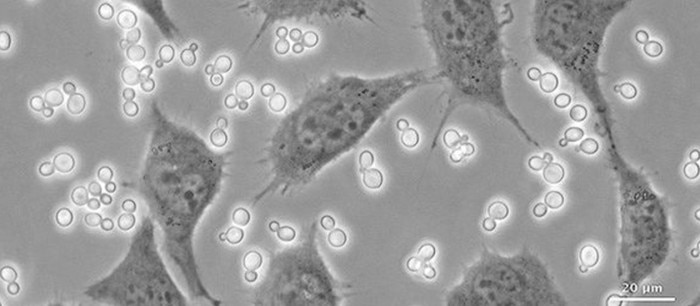
Yeasts can be visualized using phase contrast at 100x - 400x magnification. Phase contrast facilitates detection, especially at low contamination levels. Yeasts appear as ovoid bright particles between the cells. They can exist as single cells or in in the form of chains or branches.Approfondisci

Related links
Approfondisci